

Block 16
comes back to life.
One hour. Three elements.
A story Las Vegas almost forgot.
Archival imagery and projected video transform the room into the streets of early Las Vegas.
Historian and author Jami Rodman narrates the story that built Sin City, and was buried by it.
The experience unfolds live.
The history Las Vegas was built on — and tried to erase.
Before women could vote, own property, or run a business — they built the West anyway.
The women of Block 16 and the frontier West were not victims of the system — they operated outside it entirely.
At a time when American women were legally barred from financial independence in most states, Nevada's geographic and legal distance from eastern institutions created an opening.
The madams who ran the district were among the most financially sophisticated operators in early Las Vegas. They funded civic construction. They hired attorneys and physicians. They negotiated directly with city officials.
They built the infrastructure of a city that would later pretend they never existed.
Before the moguls, Las Vegas was a neighborhood of independent operators who built everything from nothing.
The Las Vegas most people don't know existed before Howard Hughes, before the Rat Pack, before the megaresorts.
Block 16 was a working neighborhood of small, independent businesses — boarding houses, saloons, gambling parlors, and cribs — operated by individuals and families who arrived with little and built with what they had.
Many were immigrants. Many were women. Most had no safety net and no institutional backing.
This was American small business at its most raw. And like small businesses everywhere, they were eventually outcompeted, absorbed, or simply bulldozed by the capital that arrived when success had already been proven.
The mob didn't corrupt Las Vegas. It capitalized on what was already there.
When legitimate capital refused to fund casino construction in the desert, organized crime filled the gap — and found a city that was already operating by its own rules.
The transition from frontier capitalism to mob control happened in less than a decade.
What Block 16's independent operators had proven — that controlled vice was extraordinarily profitable — organized crime scaled.
The women who had run legal, regulated businesses for years found themselves suddenly on the wrong side of a line drawn by the same city that had collected fees from them for decades.
Hollywood didn't discover Las Vegas. Las Vegas gave Hollywood somewhere to be itself.
The entertainment industry and the world of Block 16 shared more than geography.
They shared an economy built on performance, carefully managed image, and the distance between what the public sees and what actually happens.
Hollywood came to Las Vegas for the same reason everyone did — the rules were negotiable, the oversight was minimal, and what happened here stayed here long before anyone put it on a bumper sticker.
The same capital flowing through organized crime was flowing through film production. The same talent agencies were booking performers in both industries.
Las Vegas in the Block 16 era was the last place in America where the rules were still being written.
The frontier hadn't fully closed. Federal oversight was minimal. Local law was either cooperative or purchased.
Into that environment came every kind of person the rest of America had no place for — immigrant entrepreneurs, women locked out of legitimate business, organized crime looking for scale, entertainers looking for freedom, and working people looking for wages that didn't exist anywhere else.
The concentration of all of them — in a few square blocks of downtown Las Vegas, across a few decades — produced one of the most extraordinary social experiments in American history.
This is that story.
Block 16 was Las Vegas's original red-light district. Before the casinos, before the neon, before the Strip — there was Block 16.
The women who worked it, the madams who ran it, and the city officials who quietly protected it shaped the city we know today.
Told the way it deserves to be — with the women at the center.
Built for events that want to offer something unforgettable.
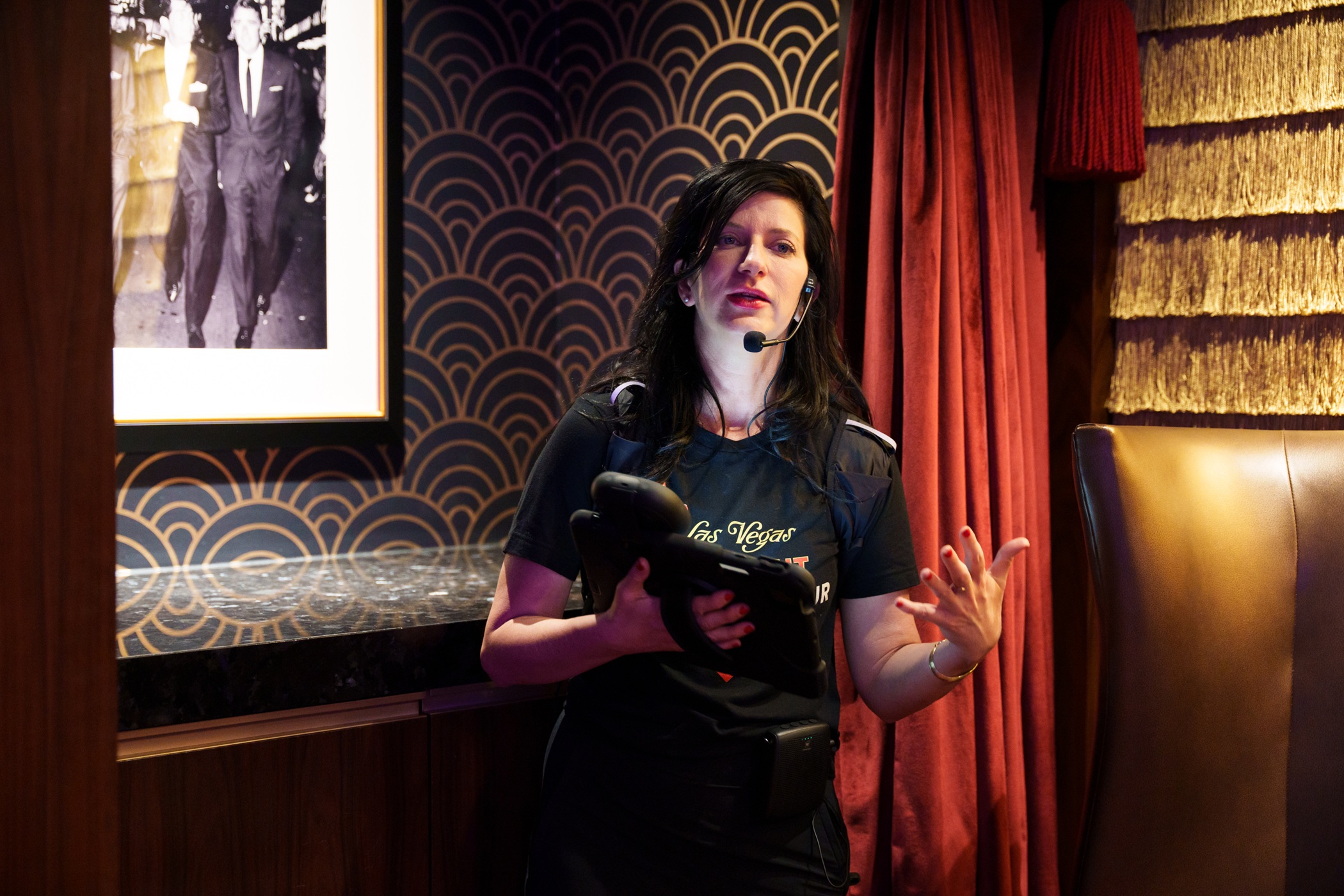
The only person
who can tell this story.
Jami Rodman is the author of The Las Vegas Madam: The Escorts, The Clients, The Truth — the definitive account of Las Vegas's escort industry — and the creator of Las Vegas's only historic Red Light District walking tour.
She has spent over a decade documenting the history most of Las Vegas has chosen to forget.
World Premiere
Bring Block 16
to your event.
YOUR NAME
YOUR NAME
ORGNIZATION OR EVENT NAME
EMAIL ADDRESS
EMAIL ADDRESS
ESTIMATED EVENT DATE